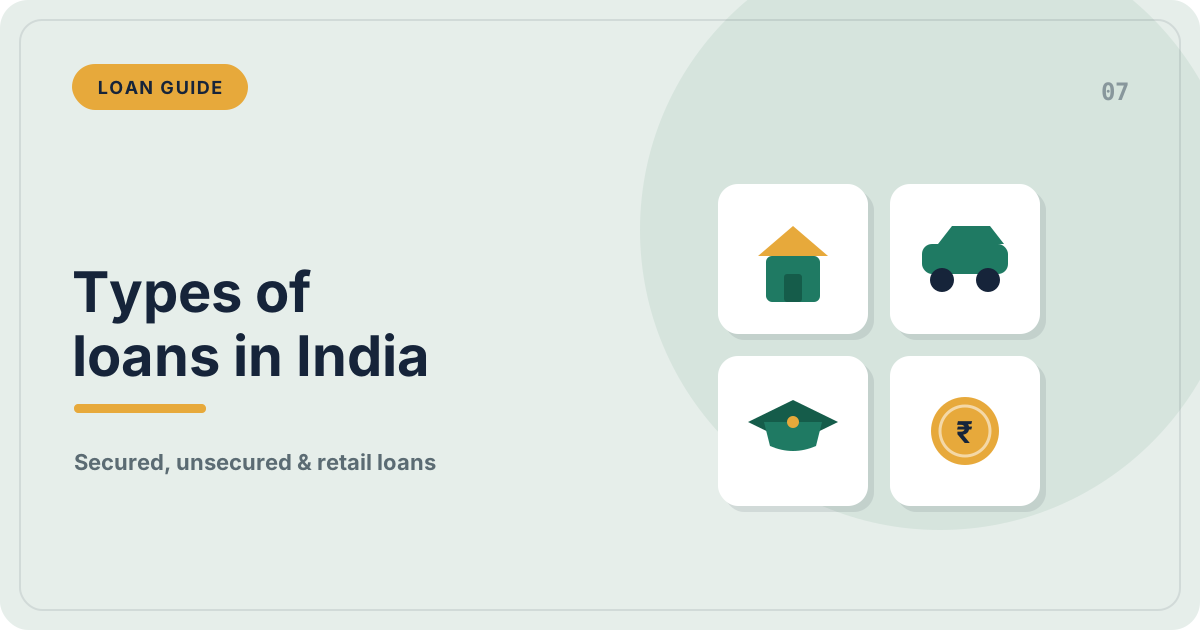
Loans in India fall into two broad groups: secured loans, which are backed by an asset (home, gold, car or property), and unsecured loans, which are not (personal loans, most education loans, credit cards). A retail loan is simply any loan given to an individual consumer — as opposed to a business or corporate loan. Knowing which category a loan falls into tells you a lot about its interest rate, paperwork and risk.
What Is a Retail Loan?
A retail loan is a loan a bank or NBFC gives to an individual customer for personal needs, rather than to a company. The word "retail" here means everyday consumers, the same way a retail shop serves individual buyers. Home loans, car loans, personal loans, gold loans and education loans are all retail loans.
The opposite is wholesale or corporate lending, where banks lend large sums to businesses. Retail loans are usually smaller, more standardised and quicker to process.
Secured vs Unsecured Loans
The biggest dividing line in lending is whether you pledge an asset:
| Type | Backed by an asset? | Examples |
|---|---|---|
| Secured | Yes | Home loan, gold loan, car loan, loan against property |
| Unsecured | No | Personal loan, credit card, most education loans |
Secured loans carry lower interest rates because the lender can recover money by selling the asset if you default. Unsecured loans cost more, since the lender relies mainly on your income and credit score.
The Common Types of Loans
Most borrowing in India falls into a handful of familiar categories:
- Home loan — to buy, build or renovate a house; long tenure, low rate, secured by the property.
- Personal loan — for any need; unsecured, quick, but higher rate.
- Gold loan — secured by gold; fast and cheaper than a personal loan.
- Car or vehicle loan — secured by the vehicle being bought.
- Education loan — for studies; repayment starts after a moratorium.
- Loan against property — borrowing against property you already own.
- Business loan — to fund or grow a business; may be secured or unsecured.
How Do You Choose the Right Loan?
Match the loan to the need. For a long-term asset like a house, a home loan with a long tenure makes sense. For a short, urgent need and if you own gold, a gold loan is cheaper. For a one-off expense with no asset to pledge, a personal loan offers convenience at a higher cost. Always compare the effective interest rate, the processing fee and the total amount repaid — not just the EMI.
Is GST Applicable on Interest on a Loan?
No — the interest you pay on a loan is exempt from GST. Interest is treated as a financial service that does not attract Goods and Services Tax. However, GST does apply to the fees and charges around a loan, such as the processing fee, documentation charges and foreclosure or prepayment fees, usually at 18%. So your EMI's interest is GST-free, but the one-time charges are not.
Can You Buy a Home Without a Loan?
Yes, if you can fund it fully from savings — and doing so saves you years of interest. But for most buyers, tying up all their cash in one asset is risky. A balanced approach is to make a healthy down payment and take a modest loan, so you keep an emergency fund intact while still owning your home. Being debt-free is valuable, but so is liquidity for surprises.
Fixed vs Floating Interest Rates
Whichever loan you pick, its interest rate is either fixed or floating, and the choice affects your EMI over time.
- Fixed rate — the rate (and usually the EMI) stays the same for the whole tenure, giving predictable payments. It can be slightly higher to start with.
- Floating rate — the rate moves with market benchmarks, so your EMI or tenure can rise or fall. It often starts lower and is common for home loans.
For long loans, floating rates let you benefit when rates drop and, for individuals, often come with no prepayment penalty. Fixed rates suit those who value certainty above all.
The Bottom Line
Every loan is essentially a trade-off between cost, speed and risk. Secured loans are cheaper but put an asset on the line; unsecured loans are convenient but pricier. Identify your need first, then pick the loan type that fits it — and borrow only what you can comfortably repay.